headerphoto

"Remember, Experience Gained is Directly Proportional to the Amount of Equipment Destroyed!" *

ARM7, ARM9, ARM11, Cortex-A8.   Don't settle for less when you can have sense and simplicity! ARMWorks ships products in discreet unmarked boxes. 

Feb 13th: How about a couple of new products? PoE is gaining more users all the time. Here are a couple of very useful PoE passive power injectors. The 8 port is ony 6 inches wide and fits about anywhere. The 16 port is a heavy guage steel for 19" racks but you can mount it anyplace it will fit. It is less than 2 inches deep, and leave room for a barrel jack plug for power. We tested some cool MuRata DC/DC converters that take up to 37 volts and deliver 5v or 3.3v and will post some part numbers and specs. They are great for DiY PoE and have a TO-220 form factor.


Feb 6th: Good news everyone! We have standardized on some memory configurations for the Mini6410 (245M RAM and 1G NAND) and the Tiny6410 (256M RAM and 2G NAND). So naturally we have some units that don't fit. What to do? Clearance Sale! These other configurations have a little less memory and the same computing performance. We just don't have room for so many variations. We have Mini6410 with 128M RAM and 256M NAND here and Tiny6410 with 256M RAM and 1G NAND here. The display options are not listed. Grab any display you need in the "Spares" section or the OEM S70 in the Accessories and we will program to match. Oem versions are also listed in the Mini6410 and Tiny6410 sections. The sale items have an SS, as in Mini6410SS.....

On another note: Buyers have asked why the 7" Innolux displays are $116 and the S70 OEM is only $65? There is actually a good reason. The S70 is a simple LCD panel and drive electronics meant to be mounted by the buyer. The mounting has to be in a recessed frame with additional support. The A70 (Inn70 or Innolux 7.0) is a panel plus bezel/frame and full size PCB with matching mounting holes for the bezel. This gives full support on the back side and full mounting stiffened by a big slab of FR4 PCB.

Jan 27th: Despite a valiant effort, we are already running out of stock on some items that won't get ordered till the end of the Spring Festival in China. In particular, Mini35, Mini2440, Mini6410 (There are some 128/256 versions we will put on the site). This is a good time to give some buying advice. Most of us find the Mini35 and Mini6410-43 to look great and be the most attractive. However, after plenty of experience, if I were starting a project with these systems, I would get the Micro2440-SDK or Tiny6410-SDK (or Tiny210-SDK to be posted soon). These SDK boards for the "stamps" have more RS232, a USB hub and more USB connections, and generally more of all the I/O. They are very versatile and great for finding out what you DON'T need in your project while making it likely you will have what you DO need. So take a close look at the Micro's and Tiny's. Besides, they are in stock - mostly.

Jan 25th: Good news everyone! We have some sample Tiny210's with an SDK board and the S70 display (in its own white shell). They are pretty cool and the SDK board even has RS-485. Photos of a break-down with descriptions are coming shortly. Aslo some new passive PoE stuff that will knock your socks off!

Jan 18th: We will be closed or semi-closed again today due to snow. If you are desperate for some good solid tech fun, check out the free online DSP books linked here DSPGuru.

Jan 4th: Goog news everyone! More Mini210s arrived! Backorders will ship tomorrow. These are so cool with 512M RAM and built in wifi and USB2.0 and all that stuff. Aside from the Android we have seen before, the latest DVD also has Linux (2.6.35.7) with Qtopia and QtE or Qt4. Some testing is in order.

Jan 2nd: Miracle on 112th Street - CTO Charlie: Over the weekend I had an amazing experience. Guess what? You can assemble a new computer, install Ubuntu, build cross development tools and BSP, and generate a new Linux for the Mini2440 in one day! A few weeks ago I had decided to set up a new computer for experimenting with some Linux tool variations, to be followed by Mini2440/Mini6410 GUI tests. I ordered this "Bare Bones" system from Tiger Direct with a quad core AMD and 8Gbytes of DRAM. There was also a sale and rebate for Acer monitors so I duplicated my favorite setup with a pair of these and the dual monitor stand. It was cheaper to get the monitors with rebate and the stand seperatly than their combination discount. I'll add a $10 video card for the second display later. For now it goes to a Mac Mini and the keyboard and mouse are switched.

Saturday afternoon I gathered all the parts to begin what I thought would be a very long frustrating process only slightly less irritating than installing Windows. I have rarely been so glad to be wrong. I assembled the computer and installed Ubuntu 11. Everything worked quite easily. No wonder Ubuntu has become so popular. I have wanted to check out the Pengutronix system for building Linux systems .......read more.

Note: New English version of the Tiny6410 Hardware Spec. here and on the Tiny6410 pages.

Dec 30th and another year gone by: So, lets start off with a few new products. OEMs and DIYers who make their own housings and mountings will appreciate the convenience (and the price!) of the S70 7" LCD for OEMs. Here it is shown next to a Mini6410 (11x11cm, not included). The outside dimesnsions are nice round numbers, 265mm x 100mm and the panel is 4mm thick. The viewable area is only slightly less and we will get the manufacturer's drawing posted soon. It is listed under Accessories. Maybe we should start an OEM category?

Enough! People have been asking for a USB hub for the Mini2440, so we now stock a USB2.0 Octopus, or half an octopus, or more of a Squidward type device. In any case, it expands a USB host to 4 connectors and is the kind that can dangle. Yes, we tested with a keyboard and mouse and a Mini2440 and it works great. Opened a console and typed Linux commands, etc. Very cool. That is the human side of the meter stick - inches.


Dec 27th: We are back. Keep an eye out for a new listing on the left. We are adding a "Specials" section. This will have one-of-a-kind systems, like a 64 RAM/128M NAND Tiny6410-SDK43, or discontinued products. Also some highly discounted items with defects, but not defective enough to write off (who can stand to throw away working stuff?). For example, the LCD manufacturers consider a display to be "defect free" with up to 3 bad pixels! But we won't ship them new that way. So we have a few displays with one bad pixel. We even made a "Bad Pixel" drawer, anticipating fairly frequent problems. But, after three years, there are only five or six units.

Meanwhile, everything is in stock with the exception of the USB <--> Ethernet converter and the Mini210 and 5" display (Sold out fast! - More are on the way).

Dec 12th: Say, how big is that Mini210? I'm glad you asked. It can be hard to judge from the length and width. It is a very nice compact system with no wasted space and a very usable lauout of connectors and I/O. Here is the Mini210 and the great high-def W50 800x480 display next to a Mini2440 (10x10cm) and W35 (320x240 pixels).

And here it is with a man's average sized hand.

Dec 8th: Good news everyone! A note from CTO Charlie. Over the weekend I was reading threads on some FriendlyARM forums and noted the number of postings like "I am new to embedded Linux and ARM. Can you tell me how to control my (gizmo of your choice)?" and, without quick answers that give total solutions some of them get a bit demanding. This got me thinking about our products and the level of sophistication, which in turn got me thinking about performance compared to some old benchmarks. I am wondering how to convey just how much computing power we can hold in our hands, and the amount of computing power it takes to make Linux seem quick and graphics look snappy.

The PDP VAX11/780 has become a standard in benchmarking. It was 32 bits and ran at about 1 MHz. And one VAX handled 64 or 128 or ??? users on a small to middle sized college campus, or a Boeing engineering division. It had a staff to keep it running, swap the big stacks of removeable hard drives, do OS updates, and work with the many people writing or running applications with remote terminals, or the Vector General vector displays and Tektronix storage tube graphics systems that had to be in the same room as the CPU. And all in a tiny amount of RAM, like 64K per user. The performance of this system is called one VAXMIPS or VMIPS. (MIPS is Million Instructions Per Second).

I had an Apple IIe (8bit 65C02) with an 8MHz accelerator, so I cheat with the Apple IIe values in the Dhrystone benchmarks. (Apple could have done 8 or 10 MHz 65C02 if they wanted the Apple II line to continue - then moved to ARM). That IIe performed at 0.18 VMIPS. That is not a very good comparison. If the Apple IIe had 128 serial cards, it would have burned up. An IBM PC/XT was a little slower and a Mac 512 was about 2 times faster (16 times faster than a base Apple IIe) at 0.35 VMIPS. Three of the earliest Macs combined had better benchmarks than a room sized VAX! 

Now here is where it gets interesting. An 8MHz Arduino Pro executes the Dhrystone benchmark at 1.1 VMIPS and a Cray supercomputer from the 80's is only 11 VMIPS. The ARMMite Pro on this web site, an ARM7 at 60MHz in Arduino Pro form, does 59 VMIPS. 59 VAX's! 

What about the Mini2440? ARM says the ARM9 core executing from local RAM and cache runs at a rate of 1.1 VMIPS/MHz. So, we get 445 VMIPS. 445 Vax computers? Yes, and orders of magnitude more RAM and Flash (or hard drive) than VAX users ever dreamed of. Then the Mini6410 is rated 662 VMIPS and the Mini210 Cortex A8, an awesome 1935 VMIPS.  It is absolutely amazing that one person can develop sophisticated applications on these processors. The most impressive software to run on these systems is Linux. Think of the thousands of man-years invested in Linux that makes it possible for a single user to actually jump in and get a project going in a day or two. That great effort has also led to the expectations that one person who is new to embedded and Linux should be able to do the same and then complain when they can't, never realizing that what they hold in their hand is the equivalent of a building with 445 air conditioned rooms full of 1980 state of the art computing equipment and an army of support personel.

Here is the benchmark list and I have added the A9 core and Intel CoreI7 with burst clocking.


  System
Processor
Speed
VMIPS
 Apple IIe 65C02 8 MHz
 0.17
 IBM PC/XT 8088
 4.77 MHz
 0.15
 Mac512   68000 7.7 MHz
 0.35
 VAX-11/780    1.00
 Arduino Pro 
  AT328
  8 MHz
 1.11
 Cray X-MP/48  
  105 MHz
11.00
 ARMite Pro  ARM7
  60 MHz
 59.00
 Mini2440  ARM9
 405 MHz
 445.00
 Mini6410  ARM11
  533 MHz
 662.00
 Mini210
 A8 Cortex
 1000 MHz
1935.00
 
 A9
 1000 MHz
 2500.00
 Intel
 Core I7
2.8 - 3.6GHz 10,094.00

Nov 23rd: Good news everyone! Everything is in stock! If the shopping cart says otherwise, it is because inventory has not been updated. We will be closed tomorrow, the 24th and short crewed Friday. Are you wondering what you would be getting into with a FriendlyARM board? Check this very good and very complete (and very readable) blog by "Wingz". Among other thing, he goes through the process of using the Pengutronix BSPs. Highly recomended. Great job Wingz!

Nov 16th: It is pretty cold in the Seattle-Tacoma area today, but at least it's a wet cold! The mangled PHP that forms the backbone of our web site is displaying some quantity discounts incorrectly. If you need 10 or more of something, use "Add to Cart" to check the correct pricing. The Shopping cart is a lot smarter than the CMS.

Nov 15th: Good news everyone! The latest herd of newly manufactured boards is coming in. Today a load of Tiny6410 with 7" LCD. The default configuration of Tiny6410 is now 256M RAM and 2G of NAND.  For Mini6410 the default is 256M RAM and 1G NAND. Tomorrow we expect Mini6410 systems, and all backorders will be shipped within 24 hours.

Meanwhile, the team at Pengutronix has done a lot of work on a Linux BSP for the Mini2440 and has announced a release for the Mini6410. They say one of the things not supported is NAND (!?!) so we can guess this means running from SD/MMC which can have its own advantages. Here is the link to the announcement and this is the page at Pengutronix.  If you have used the Mini2440 BSP, we would like to hear about your experience. Drop us an email, or start a conversation on Charlie's blog. Also check his latest posting on embedded pricing expectations.

Oct 31st: Good news everyone! The Mini2440 is back in stock - 128M NAND version only at the moment, but lots of them. This means Mini35, Mini70, etc. are all good to go.  Note: We have discontinued the 256MByte NAND versions of the Mini/Micro2440 due to low demand. Besides, we can use the room for cool new products.

Oct 15th: Good news everyone! So many blogs and web sites (and other resellers) have linked to our downloads as if they are their own, that it is sucking up all our bandwidth. The only easy way out looks like killing all the files until we install a security systems and set up Apache so that downloads must originate from our own pages. Sorry for the inconvenience. It is temporary.

Oct 21st: Good news everyone! Thanks to a bunch of unexpected larger orders, we are out of stock on a few items.The shopping cart will allow back-orders, sowatch for that out of stock message. We are out of ALL Mini2440 variations for the next 5 to 7 days. We are also have only a few Mini6410 in the 256/1G configuration and quite a few in the unusual 128/256 (left from a special order) with will need a new web page sometime in the next 12 hours. There is one odd-ball Mini6410 with 128M RAM and 1G NAND which I will find a way to list.

There are lots of Micro2440 and Micro6410 of all flavors and these are really a better development platform if you need more I/O.

Oct. 7th: Good news everyone! Is it a new product? Yes! The Mini210? That is right, a Mini with a hi-def 800x480 W50 LCD and the Samsung S5PV210. How fast? 1GHz. How much RAM? 512 MBytes. Are you kidding? 512? Wow! How much NAND? 1GByte. Is that all? Plus two TF/SD slots for 64 GBytes possible. Oh. But the graphics must be slow? Not at all! 2D/3D graphics acceleration and 1080P 30 fps MPEG decode/encode. Really? Encode? Yes, and on-board WiFi and HDMI video out and extra connecters for embedded access to USB and serial. Plus a lot more. A dual camera interface means the possibiity of some amazing stereo vision and robotics. About 10 in stock with some allocated for OEM evaluation. Look and see!
  

log out


Oct 3rd:  We have an ongoing need for consultants and contractors we can recomend to OEMs. Follow this link for more specifications.

Sept 30th: This is the first note in a couple of weeks. We have been plenty busy with stuff you are not ready to see, Grasshopper. Next week there is a holiday in China that has delayed some shipments. We are likely to run out of Mini35 128M NAND units and Mini6410 variations. The holiday is Nation Day, and it lasts 3 days, from Oct 1 to Oct 7. Don't ask. We don't understand either.

Sept 8th: How about a new product? These Yagi antennas provide 14 to 16 dB gain and we have them for Wifi and for GPRS/Cellular frequencies. Great for anyplace a bit out of range of a cell tower or for extending Wifi over a large piece of property. They are 24 inches long and clamp to any post up to 2.5" diameter (60cm and 6 cm) - or bolt to anything flat. Weight is a very back-packable 14oz. Set up a hot spot in a camp site. Use for Wifi across a valley in data collection. Or, as below, provide net access in a remote woodland hideaway. We are testing with a Wavecom Fastrack and anything else with an antenna connection. I supose you could aim the WiFi version out the window and down the street to a hot-spot at the coffee shop? These are Called "Wifi" at 2400 MHz and "3G" at 1920 - 2170 MHz. There is an arc in the mounting bracket that allows about plus or minus 10 degrees of elevation.

Sept 5th: We are closed for the Labor Day three day weekend and will be in Tuesday.

Aug26th: Good news everyone! While you have all been on vacation, we have been very busy with new products that need better drivers, various changes to current products, growing pains, running out of room again, and a new CMS for the web site (not online yet).  In the area of small improvements, we have had a batch made of the acccessory cables that come with SDKs (Ethernet, Serial, USB, etc) that are 18 inches or two feet shorter. So more like 2.5 feet (75cm) long instead of 4 or 5. There are a couple of advantages. Smaller packaging and less weight for shipping = lower shipping costs. And coiling up those long cables on a desktop or lab bench is a real pain. Around here we practically never need development connections more than arm's reach from the host development system, which is often a laptop. We hope you agree and feedback is welcome. We can get them even shorter and if the average laptop had all the connectors along one edge, we would use 18 inches as standard just to clean up all the vines in the developer's jungle. Note: There is a major overhaul underway of the Downloads page. Clearing out 15 GBytes of old Linux material and DVD .iso files has left a bunch of broken links. Don't panic! All will be sweetness and light soon, with up to date docs and software. Also: PoE 12V wall mount supplies are back in stock - PoE12VW.

July 28th: Good news everyone! We have been working on docs and drivers and all that stuff for products we bought or ordered on the China trip. Most of it isn't done yet. However, some items will work as is. For example, the EDUP NANO USB wifi will work on PCs and has the Realtek8188CUS chip set. We should have it working for the ARMs soon. In the meantime, we are using them in the office and lab whenever we find a USB wifi stick would get in the way, which is always. We visited EDUP in Shenzhen. They are a great bunch of people and a short walk from the Metro nearest the SEG building. In fact the picture of all the rooftops below is from their offices. We will be showing some very cool stuff from them as soon as new volume pricing comes in. Meanwhile, the Nano is added to the "Acessories" section of the site. It comes in a little box just big enough for the miniCD. I bet the drivers would fit those business card sized CDs that are even smaller. Or just download! Whats with all this CD stuff anyway?

It fits a USB socket nearly flush. A major convenience if you don't have wifi built in and the Nano will be great for the Mini2440 and Mini6410 because of the very small amount of space taken. I know what you are thinking, but range and data rate has been OK. Here is the data sheet.

July 1st: Good news everyone! To get in the mood for some new products that are on their way, here are some short clips from the China trip.

First is a pair of mighty fine pick and place machines making sweet music. OK, I'll add some music later. The audio is off because the conversation was rather proprietary. What is that flashy redish light? Preheat with IR diodes! It makes sure there is absolutely no moisture on the leads when they hit the solder paste on the boards. Moves a lot of parts at a time, doesn't it? Anyway, they feed straight into reflow then test and through-hole rework.

 Pick and Place

Now for somethng completely different: Here is what happens when you tell a real expert that you want to try another kind of NAND Flash. Note no solda-wick or anything. Just a can to bang the iron on to knock off excess solder.

 SMT Hand Swap

Makin cables. Here is some cable making at one of the manufacturers of cables made for us. We can easily have custom lengths made of any typical cables.

 Injection Molding

Street of dreams. Apparently people who sell LED signs have a strong affinity for each other.

 LED Street

Places to go and things to do. This is a street corner in Canton (Guangzhou). Notice in the background there is an escalator to a pedestrian overpass. Everyone is going someplace and pushing carts. Whole offices worth of computers and networking stuff go by every minute or so. (Note: Top Secret Starship under construction near end of video).

Places to go    Things to do

June 17th: Good news everyone! Charlie, Clete, and Forrest are back from 2 weeks in China. This is not the best time of year for Seatlites to hit the 90 deg (F) 100% humidity, but we caught the Dragon Boat Festival and made a full day side trip to the Sun Yat-Sen Museum outside Guangzhou (Canton), which was definitly worthwhile. FYI, most of the place spellings that look like they are for Western pronounciation are actually PinYin, a phonetic system of using the alphabet in Chinese and is nothing like it looks. (http://www.youtube.com/watch?v=c35GDOHgrnQ   The kids are saying "I am" and the letter sound.) Guangzhou is more like "Gwang Joe". Test your ear with this http://www.youtube.com/watch?v=6dZdGXW-EQU

Here are a few highligts. For instance we met an actual Transformer (maybe an Autobot?) named FAW. It wouldn't talk or transform but we got this picture as proof.


View from an office window. In fact, looking away from SEG. In Guangzhou there were a lot of windmills and solar collectors on the roofs. Not so much in Shenzhen. We didn't get a chance to investigate but think they are mostly used to run air-conditioning.


Of course, the SEG building in Senzhen is mandatory. The only drawback is that unless it is trade fair season, things like CDMA and GPRS MODEMs tend to be for locals and not quad band so we have to go visit the manufacturers to get samples - even if they have a booth at SEG.

The main market is the big part, the first 5 floors. More details next week! And here is Kowloon from a hotel room at North Point in Hong Kong.

May 16th: Good News Everyone! Well, maybe for everyone in the PRC? Today is financial talk day. As some of you know, the Chinese RMB or Yuan is no longer linked directly to a particular currency like the Dollar, and floats, partly determined by the market and partly by the Chinese leadership. The RMB is rising in value (to be honest, it has been undervalued for a long time) plus Western inflation is weakening the Dollar and Euro. The RMB has climbed 5% in the last two weeks alone. We have ignored it during 2011 but now the precentages are higher and affecting our ability to buy inventory and expand the product line. Beginning later this week, there will be about a 10% price increase on most items from China. We are considering ways to keep the individual SDK's as low as possible to keep the entry level products the bargains they have always been.

Aside from the good news of the price increases, there is some really good news. The new release of the StarGPS is King Cool! Now it is on a breakout board so that a typical Mini2440 COM cable (included) will power the GPS and Rx/Tx the serial connection to the GPS. Works with the Mini/Micro2440 Mini/Tiny6410. The new breakout also has a new much lower price. We will link to some nice GPS packages for Linux shortly.

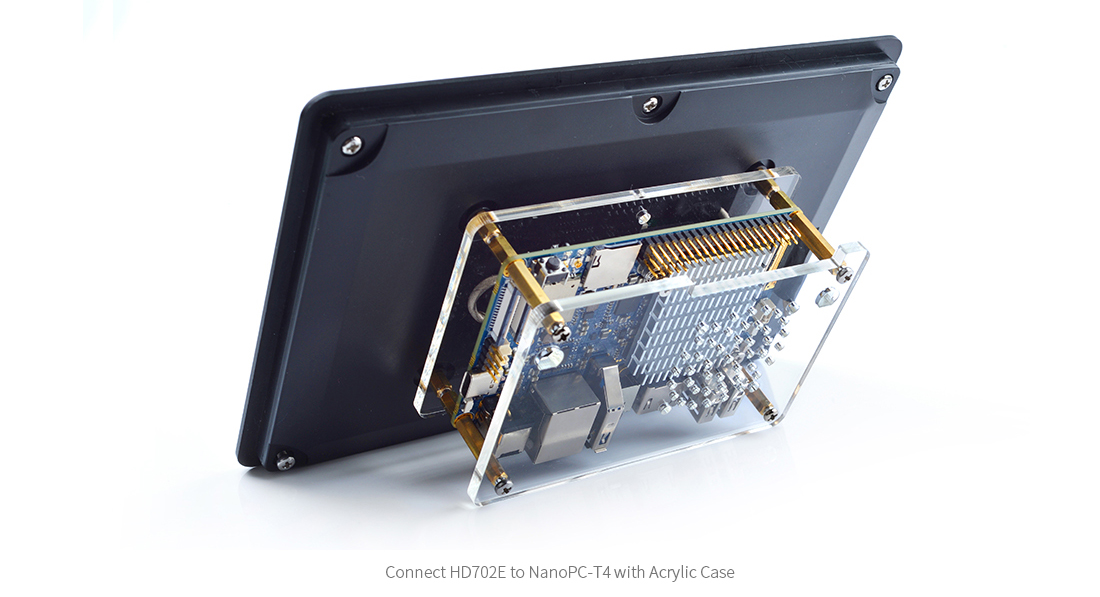
May 6th: Good news everyone! Our newest batch of Tini6410-SDK70 units have a new mounting scheme. The SDK carrier board is mounted reversed (as you always could if you wanted) but with shorter FFC cable through a slot and a set of short standoffs so you can lay it on a work surfave or mount it without interference. We have the origianl length FFC available as well as a new 50cm for those who need to mount any of the displays further from a Mini/Micro2440 or 6410.


We also have a new cable kit for the Mini6410. Woohoo!

All the click box sizes living happily together.

April 28th: Good news everyone!  We have added the Mini6410 English Manual to the Downloads page. FriendlyARM did a nice job on this.

April 18th: Good news everyone! We have a few new products today. The clik-boxes for parts storage are back and we have two additional larger sizes. These things are so nice we are using them all over the company. Plus we have added three sizes of small solderless breadboards to go with our jumper wires. They interlock in nice ways and the power supply rail sections can be moved around. They are all backed by adhesive foam. The boxes and breadboards are under "Acessories" for the time being. Oh, yes. We renamed the smallest click-box the "Cube" and the next bigger one is "Small" (it was medium). The Acessory page calles them all "snap-top" but we are liking "Click-Box" better.


April 15th: Note new download of Mini2440 DVD iso on the downloads page. This is an update to our English DVD and reflects all the software currently shipping on Mini and Micro2440.

March 22nd: We have added E.L.L.K. versions for all the combinations of Mini2440 and LCDs. See the new category at the top on the left.

March 17th: Special pricing! Yes, we have decided the full size digital osciloscopes are not an item that fits well with our growth. Besides, we need the room. We like them and are keeping some for our own use. The rest are discounted heavily to make room for something else. No back orders. When they are gone, they are gone!


         100 MHz $499.95  $395.00                                          50 MHz  $449.95   $345.00

March 15th: Good news everyone! CTO Charlie has started a blog at the bottom of the E.L.L.K. page to follow along as he goes through the course. What else is going on? We expect 7" LCDs this week and cables for cable kits that will take care of back orders. We are close to running out of Mini6410 systems and Mini35s with 128M NAND. We will substitute 256M or 1Gig if needed before more boards arrive. Watch for the backorder noticein the shopping cart. It can be easily missed (Note to CMS, needs to be more prominent!).

Feb 25th: Good news everyone! The Elk are here! The Mini2440 E.L.L.K. by Doug Abbott is an Embedded Linux Learning Kit that is a great piece of work with a tremendous amount of the good stuff without a six pound Linux book. Impossible you say? Just look!

Feb 9th: Calling all consultants! We have an ongoing need for available hardware and software engineers whom we can recommend to customers. There are plenty of OEM's out there who need to hire some expertise in a spacialty area. For example, getting a driver working for custom I/O on a Mini2440, or helping someone get started with tools and IDE, or compiling for WinCE with Visual Studio and .net. If you think you have what it takes and have done some work with our boards, we are starting a list on the Resources page. You can submit a brief CV or Resume (one short paragraph should be enough - your elevator pitch) with emphaisis on any successful work with the 2440/6410 and a link to any web site or pages you have with more information or demonstrations. It will be up to the potential contractor to vet the resources. Avoid pictures of yourself if possible. Some places it is against the hiring rules to see photos of prospective candidates during competitive selection. Send to resource@andahammer.com

Time for new products: First up is the G2403-M, a GRPS MODEM with industrial housing. We have some fleet customers who are ready to try this out for mobile reporting. It includes a serial cable and power supply and takes a SIM card. Be the first on your block to build your own OnStar! Add a GPS and a Mini2440 and keep track of just about anything.Note: This one i900/1800 MHz and will not work in the US. Quad bands are coming soon. They will work anywhere (Don't try Antarctica).

Many have asked if there will be a Micro6410. No. Too many manufacturers use the name 'Micro'. So, there is a Tiny6410, visible on the left of the SDK board. One of the cooler features is the backlight control. With a little more patience than this photographer had, you can adjust the backlight to match the ambient light and get great pictures of the board and display. If you need the math, the 6410 has the VFP* for you! Note Qt and QtE on the Qtopia 2.2.0 desktop. Woohoo!    *(Vector Floating Point processor) 


Also, Tiny6410SDK with 7" 800x480 Innolux display and Tiny6410-SDK with 4.3" LCD without wifi kit.  Up next, SDIO Wifi unit and EZVGA - real soon now. 

Jan 30th: Out of stock of Mini6410 128/256. All Mini6410 links now point to the new Mini6410 with 256MBytes RAM and 1GByte NAND. Those of you who ordered in the window between us running out and changing the pricing and pages, will get the larger memory version. We are also out of the miniUSB cables used by the 6410 boards. If you can get one localy, we will ship without the cable. This was going to be a new product announcement over the weekend. More of the 128/256 are coming but Spring Festival starts soon in China and things will be slowed down till some time after February 12th.

New Products this week: We start of with the simple and useful. These "click" boxes interlock and are great for small parts. The small one is sold in 10x8 blocks of 80 for $19.95 and the larger model is sold in 2x8 blocks of 16 for $5.95. Very nifty! Great word, nifty.


High Quality German power supply. 5.2V and 2.4A with barrel adapter for Mini/Micro2440 and Mini6410. CE and all the good certs. $9.95.

Univeral RS232. This adpater works with the TTL COM ports on Mini2440, Micro2440, and Mini6410. $12.95


USB Microscope: These are pretty cool. The magnification is controlled by distance and the deep range of focus. There is a little plastic cup that can snap to the objective end and hold a small part (or a wee beastie) at the best distance for max magnification. A small wheel controls the internal white LEDs and a simple Windows utility lets you take stills or video. Includes an articulated stand. $49.95

Jumper Wires: Great jumpers for solderless breadbards. They have a hard plastic end with a tough conductor pin. Flexible stranded wire won't break. Various sizes. About 150 pieces. $8.95


Scope Probes: A pair of 100MHz scope probes.  BNC, 1x and 10x . Includes various clampy grabby things. Just plain handy. BNC Pair. $18.95

USB to RS232 Converter: We have been giving these away with ARM9 SDKs if requested for about 2 years to help insure success with the product. There is nothing like a happy customer. Need more? $9.95

Jan 5th: Do you develope your Linux software with NFS (Network FIle System) so your working directories are on your work station and mounted over Ethernet on your Mini/Micro2440 or Mini6410? Don't like to mess with your Ethernet setup and plug the target system into a hub? You need a USB to Ethernet converter! Add more ports with this simple device (and simplify your addressing)! Use static IP for your development system. Yes, there is an RJ45 in the end of the green part. Sorry for the picture. Hmmm. At $9.95 I wonder about using my PC as a server with several of these.....

Dec 31st. Good news everyone! About 24 hours ahead of scedule, new Linux images are posted on the Downloads page. Some of you have noticed that the latest Mini35s have an LCD marked "X35". These are a great Sony 3.5" LCD and are the new standard. They have different timing (of course) and there is a new zImage_X35 kernel posted along with new kernels for all the displays and a new Qtopia with Qt4 root file system. Enjoy, and we will be posting the timing information shortly in case you like to roll your own Linux.

Dec 2nd: Are you new to embedded Linux and ARM? Do you want to get a really solid introduction that will solve 99% of your problems? Well look no further! Seriously, we strongly suggest you buy the E.L.L.K., Embedded Linux Learning Kit, from Doug Abbott at Intellimetrix. It uses the Mini35 loaded with a version of u-boot that makes it easy to set up NFS and Eclipse prepared for you. It works you through target compiling, memory mapped I/O and the GPIO port, drivers, and all the stuff that gives such headaches to people new to this.

This is a great way to get a Mini35 and save yourself days or weeks (or months) of googling and reading blogs and forums and Linux books. We will be offering the E.L.L.K. here when we get more Mini35's - yes, we like it that much. It includes a Mini35-SDK pre-loaded with the right stuff, a CD and a book(let) kind of between a book and a booklet. Doug has stripped all the uneeded material you find in a general purpose embedded book and added the Mini2440 specific material you need to make it all work. It doesn't make a thick book when finished, and you will appreciate reading direcly applicable information and step-by-step setups for networking and Eclipse.

Doug Abbott teaches embedded Linux for the University of California at San Diego and is the author of "Linux for Embedded and Real-Time Applications" and "Embedded Linux Development Using Eclipse". We take it as a good sign that his online bookshelf has the same books that get most used around here.

Dec 1: Have you been frustrated trying to do downloads with USB in Linux? Check the improved s3c2410 boot usb utility. (In the "Other Linux" section).

Nov 11th: Here is the mystery item from the Nov 9th post. Will it fit our embedded specialty? We will see. Ever wonder where those Robot One competiton systems come from? The ones all over YouTube? This is a very high quaity item from South Korea and we have the oportunity to distribute. I'm really more excited about getting their digital servos than the whole robots. The Bioloid has IR I/O and it seems they could be controlled by about anything. Just how sophisticated can your prgramming get? Expert systems with backwards chaining inference engines anyone? Romotely handled by a Mini6410? That Mini6410 Vector Processing Unit could come in handy! We will see if there is interest among education and experimenters.


The Bioloid Premium Kit is pretty big. The Robotis digital servos are fast and precise and will also be available.

That is a lot of expensive digital seros. Cool thing is they are numbered and daisy-chain like I2C, so a lot fewer wires. How big are they?

Not so small, eh? It is a good sized system. The next layer of the box has all the mechanical connectors.

There are bags and bags of bits and pieces to assemble. Joy! You can see them in action here http://www.robotis.com/xe/bioloid_en

What can you do with a Supercomputer in your pocket?*


We are outgrowing our space and will have to move for the second time in a year. Charlie thinks he found the perfect new location. We think it was the price that got him. Lets see how it looks with a nice ARMWorks sign.


"Experience Gained is Directly Proportional to the Amount of Equipment Destroyed." *

 Embedded Linux? Violating the Laws of Nature since 2004!


** Good news everyone! is the standard Professor Farnsworth greating.

*Dr. C. Towne Springer quoting Professor Z. F. Danes. A famous Danes thought experiment was proposed at an American Geophysical Union convention in the mid 1960s. A NASA scientist was speaking on the upcoming Moon missions and proclaimed that once they had some Moon rock they would be able to explain the origin and evolution of the Moon. Danes stood for attention and asked "What if it is basalt?". The speaker paused and asked him to please repeat the question. Danes replied "You said if you had a Moon rock you could tell us the origin and history of the Moon. What if it is basalt?". Of course, there was no answer because the claim was fantastic and part of the politics of the space program, not the science. Danes has never been patient with exagerations or outlandish statements by scientists.

*What is the opposite of a positron? A negatron, of course.

Copyright 2008/2009/2010/2011 Industrial ARMWorks, Inc. All rights reserved. Check.


Notes:

Check the new Mini210 1GHz Cortex A8.

Join the Goole mail group mini2440.googlegroups.com and add to the conversation at the new blog www.andahammer.blogspot.com

---